


By Festus Adedayo
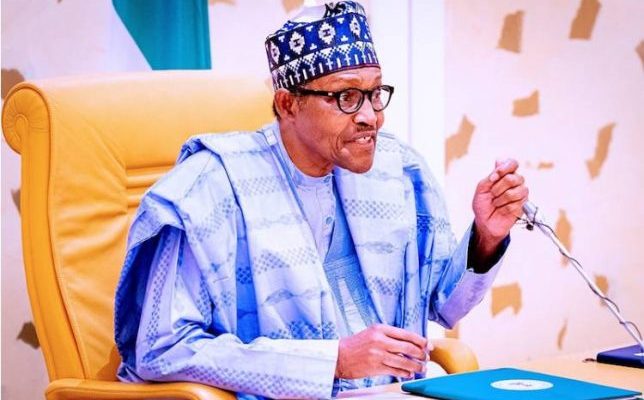
President Muhammadu Buhari made one of the most down-to-earth statements of his presidency last Thursday, though by proxy. After meeting Nigerian security chiefs at the Aso Rock Villa, the National Security Adviser, (NSA) Babagana Monguno, claimed Buhari said that he dreaded failure in office, so much; and I dare literalize it, like leprosy. “And (President Buhari) also made it very, very (italics, mine) clear that he’s not ready to exit the government as a failure,” Monguno said.
It was an opportunity for Monguno to thump the Buhari government’s chest. President Buhari, said Monguno, is very happy about the “tremendous success” he has achieved in the fight against insecurity. “It is evident that a lot of successes have been recorded,” Monguno, known for his bombasts, announced. He based these “successes” on what he called the “large numbers of people surrendering in the north-east as a consequence of the relentless efforts of the armed forces, intelligence and security agencies.” Monguno went further: The president had also been “briefed” on the “emergency situation” of the ravaging hunger in the land.
“As far as he is concerned, it’s also an emergency situation that people should not be left to wallow in hunger, and in despair, this is something that he’s also going to look into. And he’s going to use all the necessary, all the relevant tools at his disposal to address the issue of widespread hunger,” said the Nigerian topmost security chief.
us to class this morning as he has provoked the need to interrogate the concept of failure. What is failure? At what point in life is someone said to have failed? Is it ennobling to fail or, put differently, is failure noble? Is there any aesthetics in failure? In other words, should those who fail see some glamour in failure, or more succinctly, is there a philosophy of failure?
Ivan Moris, in his The Nobility of Failure: Tragic heroes in the history of Japan, examines what leadership failure means. Originally published in 1975, the book is a biography, the chronicle of the lives and deaths of nine Japanese, notable figures through the ages, who lived between the 4th to the 20th centuries. Historical individuals they were, confronted by overwhelming life travails, rather than continue to glamorize a slipping life, they each took the easy exit out by each taking one of three options. One, accepting that life was cruel in its unpleasant verdict against them, some chose to be executed in the hot battleground; others elected to be eliminated by ritual sacrifice, while some gave selves up to wither off in exile.
The Nobility of Failure is a narration of the rise and fall of some greats, figures who towered and still tower over Japanese historical and literary landscapes. It began with a tragic tale similar to Shakespeare’s Hamlet, of the story of Prince Yamato Takeru who died amidst a royal riddle. From it, Morris examined the death of kamikaze pilots during World War II, down to individuals who straddled the Japanese world like a typhoon, like Saigō Takamori. Most of the stories that engage the book are of power struggles that involved powerful clans in Japan. They range from narrations of tragic heroes who made huge success at war fronts but who, at the end of the day, suffered huge casualties in betrayals. The downfall of many of them was also due to the fact that they found themselves on the wrong sides of history while many others fell so poignantly because they surrounded themselves with fawners who merely told them what titivated their egos.
While examining what yardstick Nigerians will or have been using to determine who is a failed leader, the Japanese model should be interesting to us. Most of the stories examined by Morris were marked by the fickle nature of those close to these leaders and how they brought destruction their ways. From the book, you will get away with the impression that Japanese seem to prefer a noble loser to a vindictive winner, no matter the wrong side of history they belonged. Splattered all over the book are narrations of the exploits of warriors who though won wars but who, ages after, are labeled villains, reviled and scorned by their people.
Now, using the Monguno claim of a Buhari who doesn’t want to end his tenure of office a disaster, a tenure soon to end in less than two years time, how feasible is this claim? My departing point of analysis is this famous song by late pop diva and ex-Regent of Ikogosi in Ekiti State, Bunmi Olajubu. Sang in the early 1990s and entitled Bata Mi A Dun Ko ko Ka, this song articulates what, in grim terms, are the features of success and failure, especially in the cosmology of the Yoruba people.
In the enviable world of the been-tos of the 1960s and 1970s Nigeria, what distinguished this class of people, who were just arriving Nigeria from their search for the golden fleece abroad, among others, was their stiletto shoes which made ko-ko-ka sound as they approached. This was markedly different from the uninspiring noise made by the salubata slippers of those who had no attainment, who didn’t go to school and whose approaching walks as they plodded on, in Olajubu’s song, was signified by the mere onomatopoeic perere noises of their slippers.
Olajubu’s measurement of failure and success can be broken down to the philosophical cause and effect. If a child goes to school and aspires as his peers were doing, in the Yoruba of the time’s explanation of the roots of success, his shoes will ultimately produce the ko-ko-ka sound. If, on the reverse, the child neglects this ancient wisdom and joins bad gangs, his slippers will invariably bellow out the uninspiring and irritating perere noise. This Olajubu song, whose patent belonged to pre-colonial Nigerian Yoruba homes, was one of the teaching aids deployed during this period to inspire children to go to school. Another was also Minister of Lands and Labour in Western Nigeria in 1952 under Chief Obafemi Awolowo, Chief Joseph Folahan Odunjo’s poems in the Alawiye series which moulded most children of this period. These poems contained similar nuggets. If you see a multitude scorning education, don’t pattern your life after them; woe will betide such child, tears await a wandering child; so wrote Odunjo.
Using Olajubu as a paradigm and taking into consideration the Monguno’s claim of Buhari’s aversion for ending up in 2023 as a colossal failure, are the president’s shoes already sounding ko-ko-ka, making the perere noise or will ultimately do so?
Recently, I read Femi Adesina, Special Adviser on Media’s eulogy of his boss’ infrastructural interventions which he relishes as sine non qua non among contemporary Nigerian presidents. If you travel with Adesina on this route, you may easily be infected by this adumbration of what success is, assuming it to be the true meaning of success. Passengers who travel in Buhari’s commendable railway trains cannot but become prisoners of this mindset.
Dr. Festus Adedayo is a popular Ibadan-based columnist