
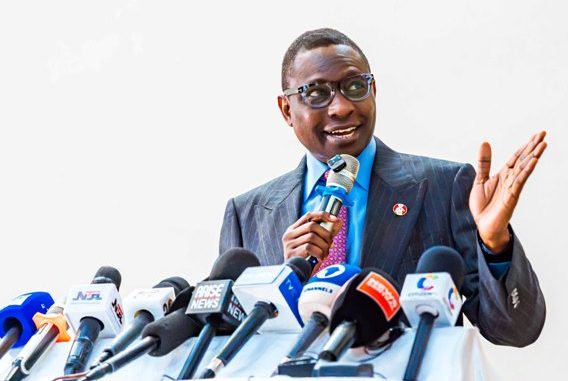
Corruption must be addressed through stronger moral teaching, the Executive Chairman of the Economic and Financial Crimes Commission (EFCC), Ola Olukoyede, has told religious leaders across Nigeria.
Olukoyede made the call on Wednesday, September 23, 2026, in Abuja during the second 2026 Council Meeting of the Nigeria Inter-Religious Council (NIREC), where the Anti-Corruption Interfaith Manual for Religious Leaders was launched.
Corruption: Olukoyede Calls for Right Religious Teaching
In his presentation, Olukoyede said the theme of the meeting, “Shared Sacred Flourishing in Nigeria,” requires stakeholders in the fight against corruption to recognize that the wellbeing of Nigerians depends partly on the actions of individual citizens.
He said corrupt practices undermine shared prosperity by allowing individuals to benefit at the expense of society.
According to the EFCC chairman, religious leaders have an important role in restoring the moral value of honest living and encouraging their followers to reject corrupt practices.
Olukoyede said Christianity and Islam can maintain their distinctive beliefs and traditions while their adherents work collectively for peace, justice, human dignity and national wellbeing.
He disclosed that the EFCC has, over the years, engaged religious leaders through an interfaith framework to encourage them to incorporate anti-corruption messages into their sermons and teachings.
“We believe that no religion condones corruption and no faith entertains fraudulent engagements,” Olukoyede said.
He explained that the Commission worked with Christian and Muslim leaders to develop an interfaith manual outlining the positions of religious scriptures and teachings on corruption.
The EFCC chairman stressed that corruption and financial crimes affect Nigerians regardless of their religious or ethnic identities.
He said stolen public funds can affect the quality of hospitals, roads, employment opportunities and other services relied upon by citizens.
Olukoyede therefore urged pastors and imams to use the newly launched manual to help their followers understand the social consequences of corruption and why corrupt practices should be rejected.
Olukoyede also challenged religious institutions to take a more active role in preventing corruption by influencing the character and values of their members.
He contrasted the roles of law-enforcement agencies and religious institutions, noting that while the EFCC can investigate and prosecute financial crimes, religious teaching can help promote honesty before criminal conduct occurs.
He said churches and mosques could also challenge attitudes that celebrate wealth without examining how such wealth was acquired.
The Executive Secretary of NIREC, Professor Cornelius Afebu Omonokhua, said the newly launched manual was developed through the Interfaith Anti-Corruption Advisory Committee (IAAC) of the EFCC.
He explained that the second edition of the anti-corruption preaching and teaching manual was designed for Christian and Muslim audiences, alongside facilitators’ guides to assist religious teachers and preachers.
According to Omonokhua, the publication is intended to provide guidance for incorporating anti-corruption teachings into religious institutions while promoting peaceful coexistence.
He thanked Olukoyede for leading the anti-corruption conversation and described the manual as important to efforts to address corruption through religious teaching.
The Secretary to the Government of the Federation, Senator George Akume, who represented President Bola Ahmed Tinubu at the event, highlighted Nigeria’s religious diversity as one of the country’s strengths.
Akume also spoke about security challenges including banditry, kidnapping, communal clashes, terrorism and other criminal activities.
He said the Federal Government remains committed to protecting lives, livelihoods and the dignity of Nigerians, while emphasizing that security requires cooperation among government institutions, religious leaders and communities.
Akume urged leaders of different faiths to speak with one voice against terrorism and banditry, describing security as a joint responsibility.
Several prominent religious and public figures attended the event, including Reverend Daniel Okoh, President of the Christian Association of Nigeria (CAN), Alhaji Muhammad Sa’ad Abubakar, Sultan of Sokoto, Professor Ishaq Oloyede, former Registrar of JAMB, Alhaji Ahmed Nuhu Bamalli, Emir of Zauzau. Abubakar Umar El-Kanemi, Shehu of Borno among other members and stakeholders of NIREC
The launch of the interfaith anti-corruption manual forms part of the EFCC’s engagement with religious institutions on promoting ethical conduct and discouraging corruption among their followers.

Be the first to comment